📊 Transfer your retirement annuity to Fynbos. See what your current fees are costing you with our calculator.
Read: ≈ 4 min
Watch: 4 min
Quick takeaways
Compound interest is when you earn returns on both what you put in and the returns you have already earned.
Time is the most important factor. Starting earlier with smaller amounts often beats starting later with larger amounts.
Interrupting compounding by stopping contributions or withdrawing too often can significantly reduce long-term growth.
What this guide covers
This guide explains compound interest in simple terms, shows why time makes such a difference, and outlines simple ways to use compounding to support your long-term goals.
What it is
Compound interest describes how money can grow when returns are reinvested. Instead of only earning on your original amount, you also earn on past growth.
If you save R1 000 and it earns a return, the next period you earn on R1 000 plus that return. Over many years, this cycle can turn steady contributions into a much larger amount than you put in.
Compounding interest works in your favour when you are investing. Most investment products reinvest returns automatically, so compounding happens in the background without you needing to take any action.
But it can also work against you when you carry high-interest debt, because the interest can also compound over time.
Why it matters
Most long-term goals, such as retirement or education, need growth that outpaces inflation. Saving alone rarely achieves this. Compounding helps your money do more of the work.
The key point is that time is a powerful part of the equation. Starting ten years earlier can have a bigger impact than trying to make up for lost time with bigger amounts later. The longer your money stays invested, the more chances it has to grow on top of past growth.
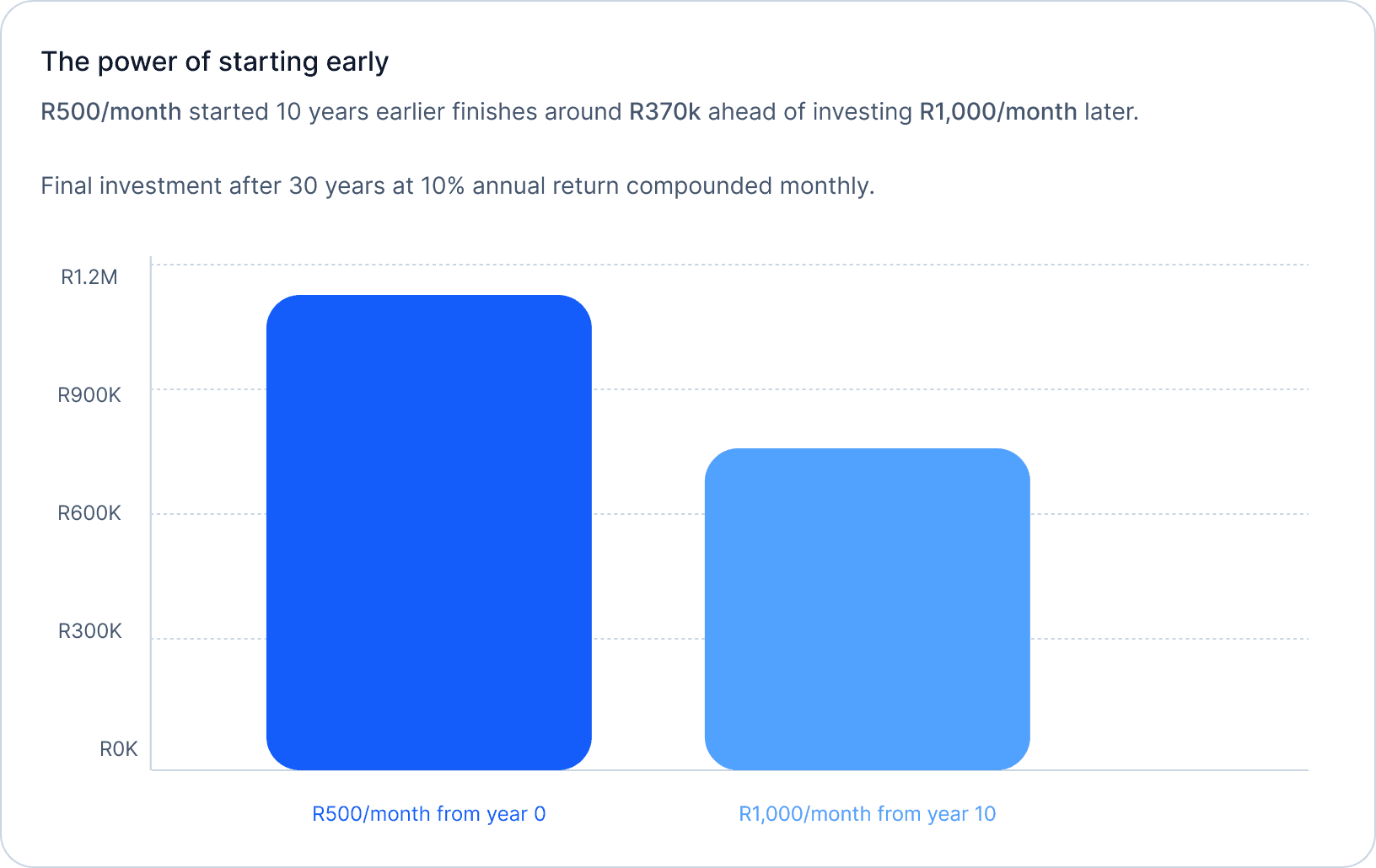
Figure 1: The power of compound growth
Understanding this helps you see why consistency matters more than finding a perfect moment to invest. It also helps you choose investments suited for growth, because higher-return assets have more compounding power over long periods.
How it works
When you invest, returns may come from interest, dividends, or increases in the value of your investment (capital growth). If these returns stay invested, they are added to your balance.
In the beginning, most of your balance is what you have put in. Over time, if you keep your money invested, the portion made up of past returns can become larger than your contributions.
Compounding does not mean your investment will grow in a straight line. Markets move up and down. The important part is staying invested over many years so that periods of growth can build on each other.
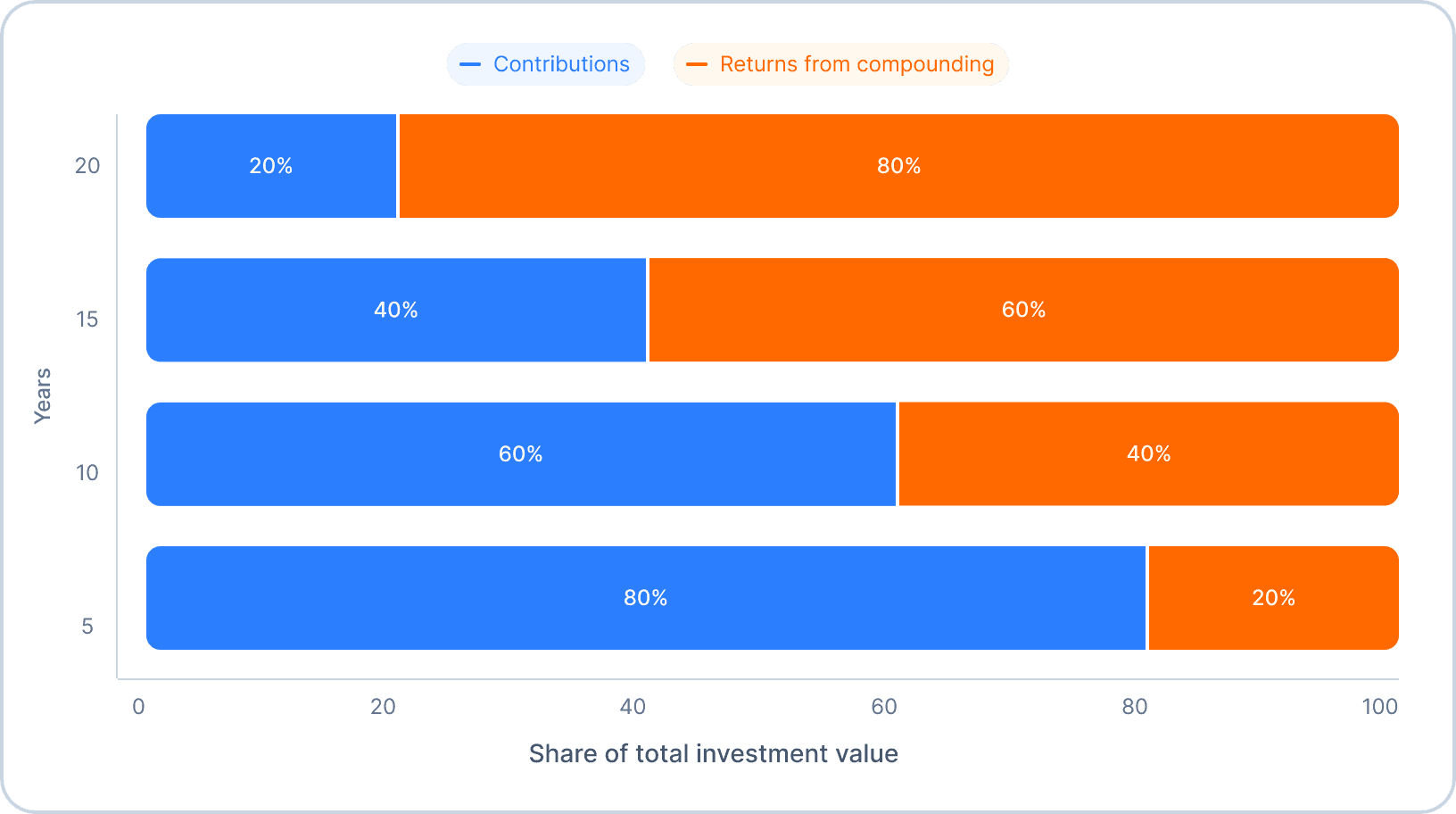
Figure 2: The power of compounding over time
Key considerations
Time in the market usually matters more than trying to pick the perfect moment.
Regular contributions help smooth out ups and downs in returns.Withdrawing often, or stopping contributions for long periods, can weaken the effect of compounding.
High fees and taxes can eat into returns and reduce compounding over time.
There is always some level of investment risk, so match your approach to your time horizon and comfort with risk.
A simple example
If you invest R500 per month for 20 years with an average annual return, your total contributions would be R120 000. With compounding, your investment value could be much higher than R120 000, because each year’s returns stay invested and can earn more returns.
The exact numbers depend on actual returns and fees, but the idea stays the same: steady contributions plus time can create meaningful growth.
Getting started
Decide on a long-term goal and rough time frame, for example 20 or 30 years.
Choose an amount you can invest regularly, even if it feels small.
Set up an automatic contribution so you do not need to remember each month.
Avoid checking your balance too often, especially during short-term market moves.
Review your plan every year to see whether you can increase contributions.
Review and maintain
Once a year, look at your contributions, your time horizon, and whether your situation has changed. Focus on what you can control: how much you add, how long you stay invested, and keeping costs in check.
Compounding rewards patience and consistency. The earlier you start, and the longer you stay the course, the more powerful it can become.
This guide is for educational purposes and is not financial advice.